SPOTLIGHT: PHIA MOORE
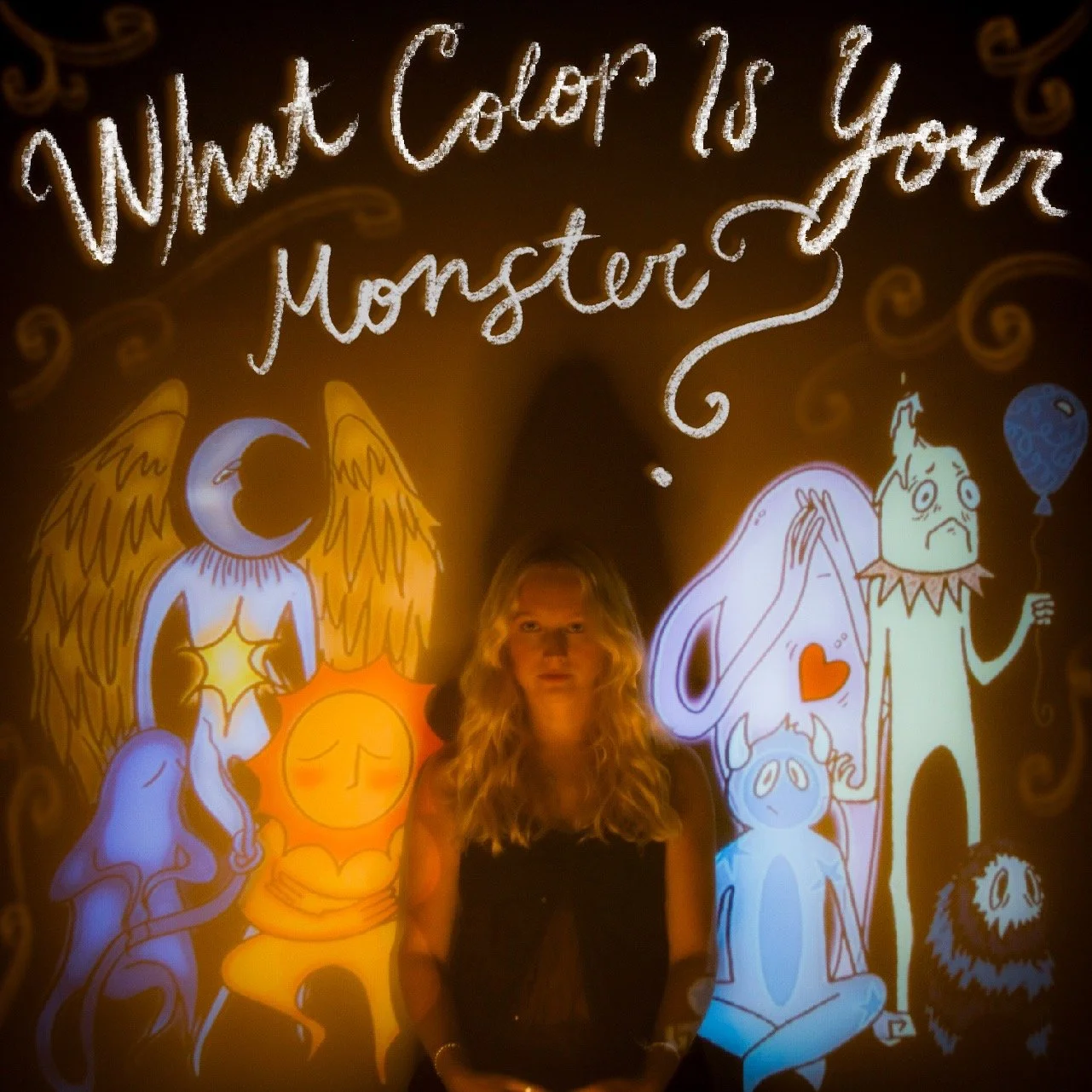
Photo by Sam Navarro
Meet Phia Moore and tune into her new EP “what color is your monster?”
“what color is your monster?” builds an entire emotional universe around the idea of internal ‘monsters.’ What first inspired you to personify your feelings this way, and when did you realize this concept could shape a full EP?
I first came up with this idea when writing the title track “monster.” This song was one for me that just sort of fell out, like it had been waiting to be written. The first lines “when I was 14 someone asked me what I most feared” were based on a real experience I had in middle school and I became really intrigued by this idea of being my own monster. After the song had been written I wrote at the top of the page “what color is your monster?” and everything just took off from there. EP’s come to me in worlds. I knew exactly what I wanted this world to become, how it looked, felt, sounded, so putting the songs together was like a puzzle, finding the songs and then in turn the monsters necessary for this story. I am lucky to be surrounded by incredibly talented people so when I went to my friend Mya and asked if she could visually capture the monsters I am writing about, I was so excited when she said yes. She encapsulated exactly what was in my mind, creating the visuals that really bring this piece together. Color is also really meaningful to me as many times songs and colors come together while I am creating music, so my manager, Sam, was super intentional when taking the drawings and bringing them every more to life through the ways she colored the monsters.
The opening track, “monster,” serves as the catalyst for the project’s emotional journey. What was happening in your life when that song emerged, and why did it feel like the necessary first step?
I wrote this song after having a crazy dissociative moment while looking in the mirror. It was quite literally like I could not see myself, and instead was a distorted, scary reflection of some other version of me. When I sat down to write it, I wanted to capture that feeling, as well as that memory I mentioned from middle school when a few girls in my grade were asking each other what their biggest fear was. I can recall thinking to myself “I am the scariest thing I know”, but not saying that aloud. “Monster” sums up the entire EP and this project would not exist without it.
Being afraid of yourself, of the capacity to feel darkness, grief, anxiety, are all things that have plagued me for my entire life. I always say, I am so great at hurting my own feelings, I know all my strengths and all my weaknesses. “Monster” is a recognition of this and instead of feeling hate towards it, coming at it with compassion and understanding. This is a piece of me, I am my own monster, and I also love her for it. “I hurt my love and my love hurts me” is an ode to caring deeply feeling empathy so strong that at times it can be painful.
You’ve described the EP as a mirror that forces introspection. Which track felt the most difficult to write because of what it revealed about you? I feel like being a songwriter is such a strange path because you walk this constant line of anonymity and specificity. It’s like being an open book but ripping out some of the pages. When it came to these tracks, I feel like “loose ends” was one I felt very exposed with. Anger and frustration are not my favorite emotions at all. I feel very comfortable with sadness, grief, loneliness, but anger, not so much. Exploring this side of myself, letting people in on my story while also keeping it as my story can definitely be a challenge. Songwriting really is healing and I feel like this song gave me the ability to process things that I had not before and I am truly thankful for that.
“people pleaser” and “half empty” deal with traits many listeners battle silently. How did you approach translating these internal tensions into melodies and storytelling that feel both intimate and universal?
Music can be an extremely somatic experience and this is something I really try to invoke in my music. People pleaser, a song about giving yourself away, playing a back and forth game that you never win, is written in a waltz to give this back and forth feeling. I wrote this song with a dear friend of mine, and we had this idea of the verses sort of being this outward conversation you may have with someone, while the chorus being the internal struggle of being a people pleaser. During the bridge if you listen closely, you can hear a taunting whisper of “people pleaser” being repeated, the only time the title is said in the song. I really wanted to get at this teasing nagging feeling being a people pleaser can have on a person.
In half empty, I truthfully wrote that song and put it away, never expecting to record it. Many times when I am writing, I really am just writing for me because I have something I need to say. I think by doing this, not considering the audience that may hear the song in the initial writing process, I am able to stay in touch with vulnerability. I have always been someone who struggles with being negative and I cannot count the amount of times I have been told “don’t be a glass half empty.” As I have gotten older, I have been able to recognize how my half-emptiness can also be a power, giving me the capacity to hold a lot and create deep, meaningful relationships. I also wanted to touch on friendship, as that is something I have always had a hard time with since I was a child. This song is the permission to feel a sense of joy, comfort, and friendship, without the fear that it may not last forever. In the song, the chord progression was also used as a storytelling device, with it going to the minor only on the words “half empty” and “capacity”. I love this musical play on words with the negative words having a minor, traditionally a more sad chord. I think it juxtaposes really well with the otherwise more upbeat, bright sound “half empty” dabbles in.
In “autumn’s broken pieces,” you use weather as a metaphor for heartbreak. How do you decide when a metaphor becomes the right vehicle for an emotion you're trying to capture?
This song idea came from a writing expertise where I was coming up with titles. I had previously had this idea that I wanted to integrate “Angel Song”, an unrecorded favorite song of mine from my departed music mentor. “September” on my first EP also dedicates grief to fall and I wanted to continue on that idea because I love writing songs that connect with other songs. I had this idea about autumn leaves and when it feels like they are falling too soon, too early, and how that parallels when people leave this world too early. This song is an acknowledgment of the pieces people leave behind when they pass away or leave, and poses the question of what do we do with these pieces. Autumn, being a personal time of grief for me, felt like the metaphor to capture this.
Rob Seals’ production adds distinct atmospheres to each “monster.” What conversations or references shaped the sonic world of this EP? Rob Seals is so incredible. He understands me in a way I do not understand myself. I will always give him these extremely abstract ideas like for example “alone in” I told him is a song sitting at the bottom of the pool when the water is completely still. He then takes these ideas and creates atmospheric delicious instrumentals and sonic devices that do exactly what I hear in my mind. We also love to use references of songs we love, analyzing why we love them and taking inspiration. Being an artist means being a listener and constantly absorbing music from people around you. I try to learn something from every song I listen to and find this makes its way into production often.
You often use visual identity such as color palettes, mood boards, character drawings to build the emotional landscape of your music. How did those visual tools influence the songwriting and arrangement for this project?
I want my projects to feel all-encompassing, like someone could step into them. Many times I find when I am writing songs, I am simultaneously getting visual ideas whether it be actual figures, colors, or even just abstract ideas for what this song may look like. Making intentional space for this visual process in my songwriting has not only made it even more fun, I feel like it also pushes me deeper in my writing to create songs that can resonate in the mind and body. This definitely came into play with this EP.
You compose primarily by ear rather than traditional notation. How does that intuitive approach affect the rawness, vulnerability, and emotional specificity of your writing?
I never learned to read music or do any of that stuff and I think because of this, I approach music in a lot less of a structured way. The most beautiful thing about music is there are no rules except those which you make and then the fun part is breaking them. By creating music based on feeling rather than something I know to be musically “correct”, I feel like I have the freedom to really get into the nitty-gritty of music. I also explain songwriting is not a task or something I do, it is something I live. Everything I do is music, whether it be sitting in class, listening to someone tell a story, taking a walk, or reading a book. Music is my entire life. I see and hear it everywhere. I think this non-traditional approach helps me live that way.
You’re also studying child development at CSULB, and you’ve mentioned that working with children expands your imagination as a songwriter. How has your education shaped the way you approach emotional honesty and storytelling in your music?
I love this idea that children create something out of nothing. I often think about a video I saw where someone showed children’s toys all over the ground and it simply looked like a mess. But when they got on the floor, on the child’s level, they could see the entire world they had created full of buildings, characters, and stories. This magic kids possess is my life-long journey to be in touch with. Kids only know how to be kids, how to be themselves. They cry, scream, laugh, and feel loudly and unapologetically. I try to embody that in my music.
You’ve said this EP is an invitation for listeners to examine their own inner monsters. What do you hope someone hears or sees in themselves the first time they sit with this project from start to finish?
Although I often feel as though I am the only one who struggles with my own inner-monsters, I know that is not the case. This EP is for the people who have experienced grief, heartache, hurt, and have a large capacity to feel. I hope when that person listens to the EP, they can be gifted with compassion for those pieces of themself. Music has always been one of the few places where I have felt I belong, I hope to create music that can do that for others like it has for me.
Listen to “what color is your monster?” here.